Instant Download
Your unique course download link appears right after you complete your purchase, and is also sent instantly to the email address you provided.
Couldn't load pickup availability

Your unique course download link appears right after you complete your purchase, and is also sent instantly to the email address you provided.
14
19 h 18 min
Google Drive Link, Offline
During the online course, Chris Chang will talk about:
Early treatment primarily deals with emerging permanent teeth and facilitates normal skeletal development to avoid subsequent complex orthodontic challenges. Therefore the emphasis at this stage is to alleviate symptoms to pressing issues and clinically the interventions often lack a holistic diagnosis and long-term treatment plan. This lecture hopes to provide a systematic diagnostic approach to help clinicians to decide when and what conditions warrant an early intervention while others are merely futile efforts that will only reduce patient cooperation over an extended period of treatment. Systematic diagnostic approach;
The orthodontic resolution of Class II malocclusion involves designing mechanics to distally move teeth with a number of orthodontic appliances. This lecture aims to convince clinicians that severe Class II malocclusion can be treated with the appropriate application of bite turbo, Class II elastics and IZC screws. These simple tools together form a consistent force system that requires little patients’ active compliance and avoids many of the challenges presented by conventional treatment modalities, such as extraoral headgear and functional orthopedic appliances.
Detailed treatment processes will be presented to enhance clinicians’ skills in executing this treatment method.
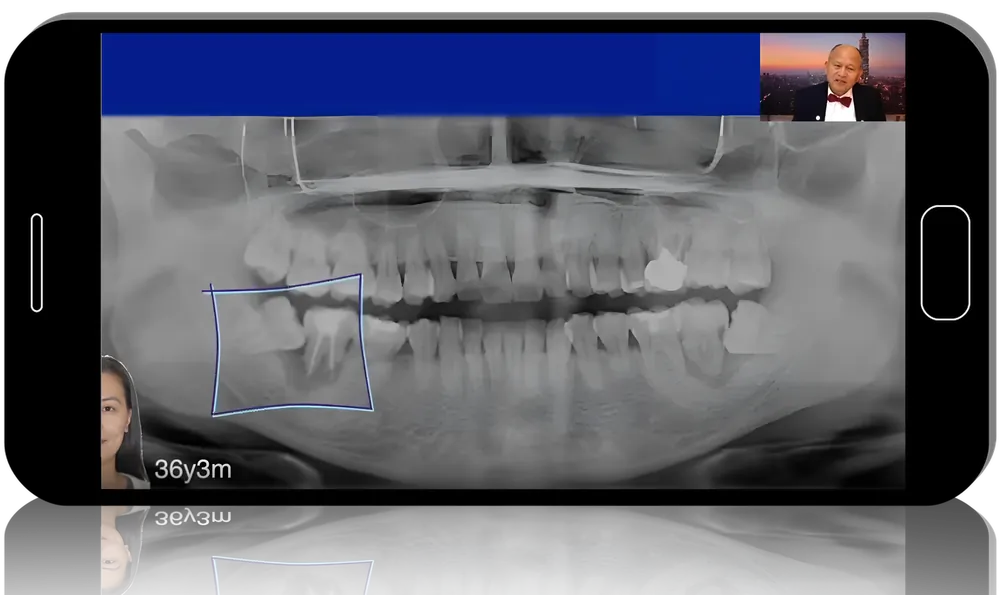
Chronic tooth loss is one of the common problems in adult complex cases.
This issue often results in tilted adjacent teeth, elongation of antagonistic teeth, bone resorption in the edentulous zone, and even maxillary sinus pneumatization, in addition to a wide range of periodontal challenges.
Orthodontic treatment provides an ideal alternative to create more favorable soft and hard tissue conditions and pave the way for following periodontal, restorative care and implant surgeries. This lecture aims to demonstrate how to utilize orthodontic techniques to design and execute a comprehensive treatment plan to achieve a functional and esthetic occlusion for adult patients.
Aligner treatment has seen a tremendous growth in patient acceptance and clinical efficacy in recent years. However, there are still certain limitations to aligner treatment. In this presentation, several treatment strategies and orthodontic auxiliaries are proposed, including but not limited to, TA
Ds, segmental braces, minor surgeries and bite bite plates, that can turn cases from unqualified to qualified ones or drastically reduce treatment complexity. Practical tips on how to efficiently write and revise Clincheck plans and how to correct mistakes during aligner treatment will be discussed.
Lesson 5: EXTRACTION VS NON-EXTRACTION: A REASONABLETREATMENT PLAN“To extract or not to extract” is the quintessential question faced by orthodontists. This lecture will present several consecutive cases to demonstrate the thinking process of this issue. A practical decision making table will also be provided to guide the diagnostic process. Furthermore, when extraction is clinically indicated but refused, what happens to long-term stability? How do we handle it?
Practical tips will also be shared in this talk, a topic worth investigating for a lifetime.
Lesson 6: ASYMMETRY TREATMENT: TADS+DAMON QAsymmetries, whether dental or skeletal, are among the most challenging problems in orthodontics. While surgery proves to be a reliable treatment option to correct skeletal asymmetries, The use of TA
Common anterior open bite corrections include extractions and a variety of appliances, such as, high-pull headgear, bite blocks, and elastics. In more severe cases, orthognathic surgery is required to correct the skeletal malocclusion.
While surgery proves to be a reliable treatment option, many patients reject it for the prohibitive cost, pain and long recovery time. Recently, buccal shelf screws have allowed orthodontists to treat some of these patients without orthognathic surgery through intrusion of the posterior maxillary molars. They provide a treatment alternative for mild-to-moderate open bite cases without other skeletal contributing factors. This lecture will demonstrate how to properly identify and eliminate the etiology of anterior open bite and create effective strategies to correct it with TA
Ds and extractions.
This lecture features well-documented cases to help clinicians create and execute easy and logical treatment plans. The supporting basic biomechanical principles will be explained. Critical evaluation of extraction v.s. non-extraction will also be highlighted in the lecture. The goal is to convince you how you CAN treat these difficult cases easily with the powerful combination of self-ligation system and miniscrews.
Digital orthodontics has seen tremendous progress in recent years when clinicians now have easy access to precise digital data of roots and crowns from 3D and intra-oral scans. With the aid of digital simulation and software programming, doctors can have a thorough planning of an ideal result for each case even before beginning treatment.
Together with customized brackets, precise indirect bonding and pre-fitted arch wires, digital orthodontics has significantly elevated treatment efficiency and consistency in treatment quality. This lecture will demonstrate a wide range of clinical cases to argue that “All things digital” is the new frontier of modern orthodontics.
S TECHNIQUES
Tooth impaction is a common problem in our clinical practice. Eruption and management of impacted teeth require carefully designed surgical procedures and orthodontic treatment. This lecture will detail some of the most common types of impaction cases, including maxillary central incisors and impacted canines(both labially and palatally), and their recommended course of surgical as well as orthodontic treatment. An innovative, minimally invasive surgery, the VISTA technique, that can shorten the treatment time and best preserve the keratinised gingiva, will be introduced.
STECHNIQUES
Tooth impaction is a common problem in our clinical practice. Mandibular impactions, compared to maxillary impactions, present greater challenges because of the surgical risks of damaging adjacent nerves and vessels, the difficult design of a powerful anchorage and higher resistance during forced eruption due to the high bone density in the mandible. This lecture will detail some of the most common types of impaction cases, including mandibular canines, premolars and molars and their recommended course of surgical as well as orthodontic treatment. Buccal shelf screws, combined with 3-D lever arms are proposed as an ideal mechanical design will be introduced.
Skeletal Class 3 malocclusions are usually treated with extensive orthodontics and orthognathic surgery after completion of active growth. Conservative treatment (without orthognathic surgeries) requires a broad range of tooth movement in 3D. Temporary Anchorage Devices (TA
Ds), placed between the roots of teeth, are of limited value for moving the entire dentition, relative to its apical base of bone.
However, extra-alveolar TA
Ds, placed in the extra-alveolar bone of the maxilla and mandible, provide anchorage for extensive dentofacial orthopedic corrections, in both growing children and adults. Many skeletal Class 3 malocclusions can be effectively managed without orthognathic surgery.
In this talk I will demonstrate the potential for conservative management of severe Class 3 malocclusions.
Several popular minor surgeries that can either shorten treatment time or fine tune the results, will be proposed and demonstrated in the lecture, including gingivectomy (esthetics), crown lengthening procedures(gummy smile correction), open-window technique(palatal impaction), and VISTA(upper labial impaction). These surgical techniques are simple to learn and easy to execute. With the enhancement of these quick surgeries you can bring your orthodontic results to a whole new level. This is a topic that every orthodontist shouldn’t miss.
Ds can provide a stable and efficient anchorage to facilitate bodily movements, such as forced eruption and mesialization that are particularly challenging for aligner treatment. They are also very effective in molar uprighting and impaction treatment. In this lecture various cases will be presented to illustrate how TA