Instant Download
Your unique course download link appears right after you complete your purchase, and is also sent instantly to the email address you provided.
Couldn't load pickup availability

Your unique course download link appears right after you complete your purchase, and is also sent instantly to the email address you provided.
17
13 h 45 min
Google Drive Link, Offline
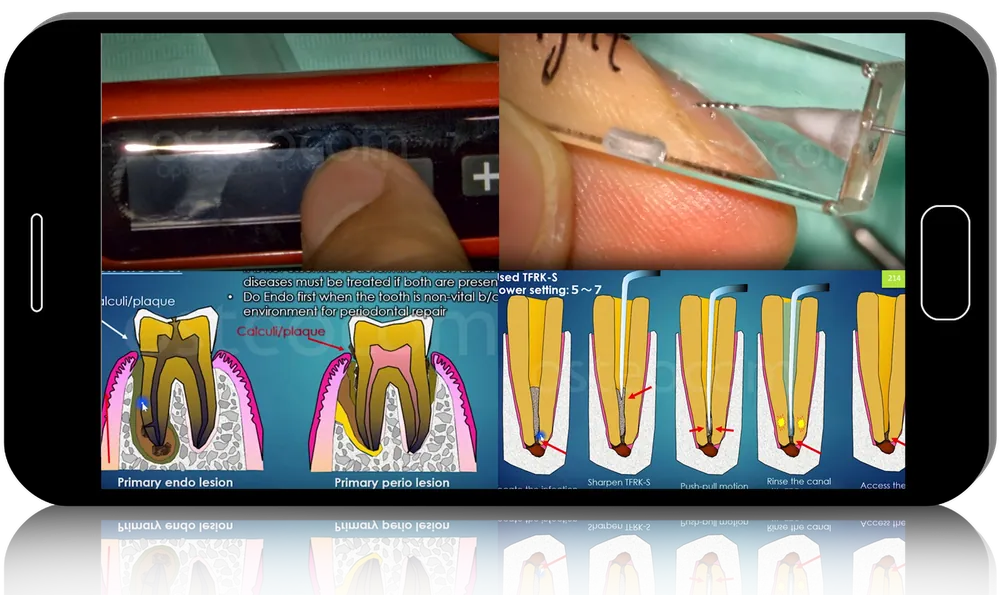
This Masterclass provides an in-depth focus on the technical challenges frequently encountered in endodontic retreatments. Key topics include the use of MTA as a superior obturation material than traditional gutta-percha, advanced diagnostic protocols, and step-by-step ù techniques for effectively removing gutta-percha and MTA fillings.
Special emphasis is placed on innovative methods for bypassing non-visible ledges using newly designed fan-shaped tips and slow rotation techniques, and on the management and removal of broken instruments using ultrasonic and rotary approaches.
Finally, a unique collection of Live Demos performed by Dr. Terauchi on simulation models showcases all the techniques and protocols discussed, as well as his real-time problem-solving skills.
Join Dr. Yoshi Terauchi and find out how to improve retreatment outcomes, reduce surgical interventions, and confidently tackle even the most complex endodontic cases!
At the end of the course, you’ll be able to:
This course is ideal for endodontists who wish to enhance treatment success and improve their skills for managing complex cases and challenges, such as broken instruments, ledges, and difficult obturations.
The first video lecture of the course is dedicated to a brief presentation of the topics that will be covered in the following sessions.
In this video lecture, Dr. Terauchi presents a comprehensive protocol for successful endodontic retreatments, developed over years of clinical experience in treating complex cases. The session focuses on cases where retreatment is the preferred choice, with particular emphasis on accurate diagnosis, non-odontogenic pain, and the use of MTA as the exclusive obturation material.
The lecture delves into the technical aspects of bypassing ledges and retrieving fractured instruments, as well as MTA-based obturation techniques. A significant focus is dedicated to understanding pain and its implication in post-treatment outcomes.
Dr. Terauchi also shares his clinical data, showing that the consistent use of MTA has drastically reduced the need for surgical intervention.
By the end of the session, clinicians will gain valuable insight into diagnosing challenging cases, managing persistent pain, and maximizing the success rate of non-surgical retreatments through structured, evidence-based protocols.
In particular, this lecture covers the following topics:
This video lecture explores the critical importance of accurate diagnosis in endodontic retreatment and its direct influence on treatment outcomes.
Through detailed clinical and radiographic criteria, Dr. Terauchi guides clinicians in distinguishing between endodontic and periodontal lesions.
Special attention is given to primary endodontic lesions with secondary periodontal involvement, the diagnostic implications of furcation canals, and the different types of tissue damage (mechanical, chemical, and inflammatory) affecting pulp and periapical health.
The lecture highlights the added diagnostic value of CBCT imaging, particularly in revealing hidden lesions, anatomical complexities, and influencing retreatment protocols.
In particular, this lecture covers the following topics:
This focused lecture addresses the limitations of gutta-percha as a root canal filling material and its implications for long-term endodontic success. Despite being widely used, gutta-percha lacks intrinsic antibacterial properties and can easily become contaminated by biofilm-forming bacteria.
Dr. Terauchi discusses how fillings that appear radiographically adequate—reaching the canal terminus—do not always result in healing, especially if infected gutta-percha remains within or beyond the canal. The lesson explores how such contamination is a common cause of persistent apical periodontitis and underscores the importance of thorough disinfection and material selection during retreatment procedures.
This session provides valuable insights for clinicians aiming to improve success rates by moving beyond traditional materials and adopting biologically sound treatment approaches.
In particular, this lecture covers the following topics:
This hands-on LIVE DEMO session complements the previous theoretical lecture by showing the clinical application of gutta-percha removal techniques on a simulation model.
Dr. Terauchi demonstrates step by step how to efficiently remove gutta-percha using a dedicated kit, combining manual and ultrasonic instruments.
The session focuses on real-time handling of hand files and three different ultrasonic tips, offering practical guidance on how to approach complex retreatment cases where existing filling materials must be eliminated with precision.
This live demonstration provides clinicians with a clear and replicable protocol to improve efficiency and predictability during the gutta-percha removal phase of endodontic retreatment.
In particular, this lecture covers the following topics:
This detailed video lecture focuses on advanced techniques for removing set MTA obturation material using ultrasonic tips combined with chemical agents such as EDTA.
Dr. Terauchi demonstrates how to effectively disrupt and dissolve hardened MTA within the canal, emphasizing the synergy between mechanical and chemical methods.
The lecture also covers protocols for removing biofilms by combining rotary and hand instruments with ultrasonic irrigation, ensuring thorough canal disinfection.
Special attention is given to managing ledged canals, including the characteristics of ledge formation and the appropriate materials and techniques to bypass them safely.
Clinicians will gain a comprehensive understanding of how to handle challenging retreatment cases involving MTA and biofilm removal while maintaining canal integrity.
In particular, this lecture covers the following topics:
In this video lecture, Dr. Terauchi introduces refined techniques for bypassing non-visible canal ledges, an advanced challenge often encountered during retreatment procedures.
When pre-curving the tip becomes impractical, innovative solutions like the newly designed fan-shaped ultrasonic tips offer improved control and flexibility.
The session reviews three main techniques: the hand instrumentation technique, the slow rotation technique, and the 90-degree T-mode approach.
Emphasis is placed on file selection, rotational speed modulation, and maintaining tip alignment with the original canal path to prevent iatrogenic damage.
Participants will discover practical tools and strategies to approach ledge bypassing with confidence and precision, even in the most complex root canal anatomies.
In particular, this lecture covers the following topics:
This LIVE DEMO session puts into practice the key techniques discussed in the previous lecture on bypassing non-visible canal ledges.
Using a simulation model, Dr. Terauchi demonstrates how to safely and effectively navigate ledged canals through a combination of hand instrumentation, controlled rotation, and fan-shaped ultrasonic tips.
The demo offers a step-by-step visualization of instrument handling, file selection, and tip orientation—providing clinicians with clear, actionable methods for maintaining the original canal path and minimizing procedural errors.
This hands-on session is essential for endodontists seeking to master precision-ledged bypassing in anatomically complex retreatment scenarios.
In particular, this lecture covers the following topics:
This lesson explores the rationale behind the use of MTA as a root filling material in non-surgical endodontic retreatments, offering a biologically superior alternative to traditional gutta-percha.
Dr. Terauchi analyzes the limitations of gutta-percha and sealer-based fillings, particularly their poor sealability and susceptibility to reinfection.
The session presents a direct comparison between the clinical protocols and anatomical preparations required for MTA versus gutta-percha obturation. Emphasis is placed on the long-term benefits of MTA, including enhanced biocompatibility, sealing ability, and its capacity to reduce the need for surgical interventions.
This presentation is particularly valuable for clinicians aiming to improve retreatment outcomes by integrating more reliable and biologically stable materials.
In particular, this lecture covers the following topics:
In this LIVE DEMO, Dr. Terauchi shows the clinical application of MTA obturation techniques in endodontic retreatments using a simulation model. Building on the theoretical concepts presented in the previous lecture, the session focuses on how to properly prepare the canal system and deliver MTA with precision and control.
The demonstration contrasts the procedural nuances between MTA and gutta-percha fillings, highlighting the specific instrumentation and timing required for successful placement. Special attention is given to handling MTA’s physical properties and ensuring a hermetic seal to optimize treatment outcomes.
This hands-on lesson provides clinicians with a replicable protocol for incorporating MTA into retreatment workflows, aiming for long-term clinical success and reduced surgical needs.
In particular, this lecture covers the following topics:
This lesson explores the critical factors that influence the success of broken file removal in endodontic retreatment. Through the analysis of a challenging clinical case involving two fractured instruments—one visible and the other non-visible, both extruded into bone—Dr. Terauchi outlines the decision-making process that drives predictability and clinical outcomes.
A detailed comparison is made between removal strategies for visible and non-visible fragments, including canal enlargement, ultrasonic tip usage, and space creation along the inner canal wall. The lecture emphasizes the diagnostic importance of CBCT imaging for precise localization, length assessment, and treatment planning.
With a focus on minimizing dentin loss while maximizing removal efficiency, this session offers a step-by-step guide for clinicians aiming to master one of the most delicate procedures in modern endodontics.
In particular, this lecture covers the following topics:
This lecture focuses on the complex challenge of removing non-visible broken instruments located beyond severe canal curvatures, exceeding 30 degrees. Dr. Terauchi presents advanced ultrasonic instrumentation strategies specifically developed to navigate and access fractured files in anatomically demanding situations.
Two preparation techniques are compared—180-degree and 90-degree approaches—detailing the scenarios in which each method offers optimal visibility and access. The lecture outlines critical steps for conservative dentin removal, tip positioning, and the precise manipulation of ultrasonic energy to safely dislodge fragments embedded deep within curved canals.
By mastering these advanced techniques, clinicians can significantly improve their success rate in fractured instrument retrieval while preserving tooth structure and minimizing iatrogenic damage.
In this LIVE DEMO, Dr. Terauchi demonstrates the clinical application of advanced ultrasonic techniques for removing non-visible fractured instruments located beyond severely curved root canals. Using a simulation model, he replicates the anatomical challenges posed by curvatures greater than 30°, offering a step-by-step visual guide to the 180-degree and 90-degree preparation strategies.
The session focuses on optimizing access and visualization without compromising dentin integrity. Viewers will gain practical insights into tip selection, movement control, and precision targeting of the broken fragment within tight canal curvatures.
This hands-on demonstration reinforces the theoretical concepts covered in the previous lecture and equips clinicians with actionable protocols for one of endodontics’ most technically demanding procedures.
In particular, this lecture covers the following topics:
This lesson presents a preliminary study exploring the time-efficiency and predictability of ultrasonic removal of non-visible broken instruments during endodontic retreatment. Results show a striking pattern: when ultrasonic tips successfully mobilize a fragment, removal typically occurs within 10 seconds. If the file does not move within that window, attempts beyond 10 minutes often fail.
Dr. Terauchi discusses the anatomical and mechanical factors that affect this predictability, such as file length, diameter, and canal curvature severity. He also demonstrates a protocol combining ultrasonic tips with additional tools like Piezoflow and Endo Shaper to enhance removal success in complex cases. Clinicians will gain a deeper understanding of when to persist, when to reconsider, and which techniques can increase the odds of safely retrieving fractured files.
In particular, this lecture covers the following topics:
In this LIVE DEMO session, Dr. Terauchi shows the application of ultrasonic techniques for removing non-visible broken instruments within severely curved canals. Participants will discover the “10-second rule” as a predictor of removal success: if the fragment does not begin to move within 10 seconds, prolonged attempts are unlikely to succeed.
Using a high-fidelity simulation model, Dr. Terauchi walks through various removal protocols involving ultrasonic tips, Piezoflow, and Endo Shaper systems. The session illustrates how file length, diameter, and curvature influence access and effectiveness, and provides visual guidance on adjusting strategies in cases of limited response.
This demonstration bridges theory and practice, equipping clinicians with real-time decision-making tools and technical accuracy in one of endodontics’ most delicate procedures.
In particular, this lecture covers the following topics:
This lesson focuses on the clinical management of long or deeply positioned broken instruments, particularly those located around severe canal curvatures. Dr. Terauchi presents the use of burs to carefully access and retrieve longer fragments, minimizing dentin sacrifice and procedural risks.
The session highlights the integration of ultrasonic irrigation systems like Piezoflow, which assist in dislodging fragments through enhanced acoustic streaming and debris clearance. A detailed flowchart is also provided, outlining the clinical decision-making process based on file visibility, location, and canal anatomy.
Through a combination of precision instrumentation and step-by-step planning, clinicians will be better equipped to approach even the most complex instrument removal cases.
In particular, this lecture covers the following topics:
In this LIVE DEMO, Dr. Terauchi demonstrates the practical application of advanced techniques for removing long broken files, especially those located around severe canal curvatures. Using a detailed simulation model, he showcases the use of rotary burs for precise dentin removal and fragment access, combined with Piezoflow ultrasonic irrigation to enhance fragment mobilization and cleaning.
The demonstration also walks through a clinical flowchart guiding treatment planning and decision-making during the removal process. This hands-on session bridges theoretical concepts with real-time practice, providing valuable insights for clinicians facing challenging fractured instrument cases.
In particular, this lecture covers the following topics: